Today, I'm going to blog about the Multicam and the ACU (Army Combat Uniform, the pattern itself is refered as ACUPAT). The rival patterns of the US Army and the degree of ridiculousness surrounding the debate. Now before we get deeper into this matter, let's see what's the issue and let's see what's so special about both camos.

The current issue: Last month, the United States Army has just decided to replace the ACU (pictured above on the right) with the Multicam (pictured above on the left). This has been controversial as the ACU has been used for years and the Multicam has been in the civilian market for quite a long time. Not to mention, the Multicam isn't digital camo, in which the American government has spent a lot of money for research on. Changing the pattern back to non-digital seems to make a statement to the American public that sounds like "Hey, we spent the tax payer's money on digital camo research and we have decided to use a private company's pattern which seems to be better. What a waste of tax payer's money!" That is one statement the Pentagon is making towards the genral public. However, the multicam seems to work better as a "universal pattern" more than the ACU which in the 1st place, is claimed as the "Universal Camouflage Pattern (UCP)".
To better understand the issue even more, let's dissect what's so special and what's wrong with these patterns.
What's so special about the ACU?

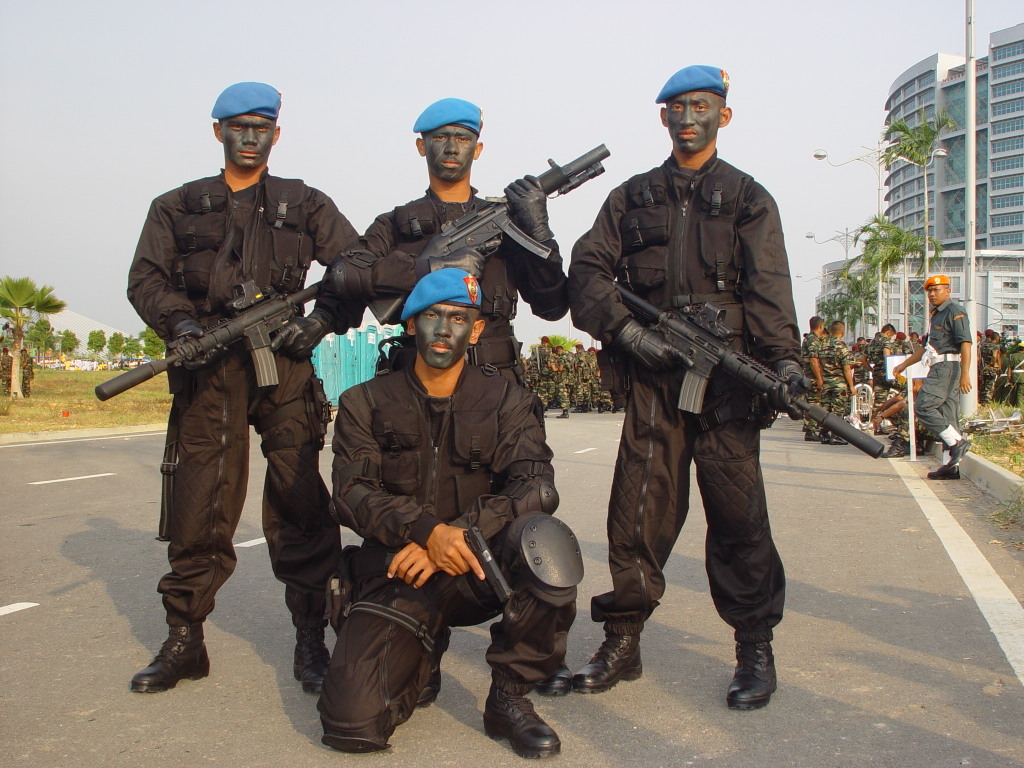
The ACU uses a style of camoflage called "Digi-Cam" in which instead of the typical patterns and shape, it utilizes pixels on it's pattern. The 1st country that 1st used the pattern was Canada with their CADPAT. The American government spent a lot of money trying to emulate the CADPAT for their own purposes. Even the Colombian Army had their own digi-cam for woodland theater of operations. CADPAT came in 2 variants, the woodland variant and the temperate variant. The ACU on the other hand, came out in one variant: GREY. According to some smart-ass general, they claimed the ACU is a UCP or Universal Camouflage Pattern. Now judging from the above, the ACU works well in Mountain Terrains. It also seems to work fine in Urban and Snow terrain. So good in Urban terrain that the Polish's Police Special Forces with BOA, adopted it too. (The Malaysian Maritime Enforcement Agency's Commandos aka STAR also adopted it). Due to the fact it is suppose to work well as a universal pattern, it is expected to work well in other terrains too. Then again, it works in Urban, Snow and Mountain terrains.
What's the problem with the ACU?
Now the problem with ACU is that, it does not function it's role as a universal pattern. While it works great in snow, mountains, grey coloured deserts and urban areas it does not blend in other theater of operations (READ: IRAQ AND THE AFGHAN PLAINS). What I mean by this is that Iraq has a tan desert. Using an ACU in such condition would only make you pop up from miles away. This explains why many PMCs prefer the old 90s DCU or it's much more popular name, Chocolate Chip. Not only that, some turn to the British Desert Variant-DPM that has been used by them. On the Afghan plains however, the terrain varies quickly. While one moment a patrol may be working in a snow covered terrain and rocky grounds, another moment, they would end up in poppy fields in which they stand out and become Taliban snacks. This explains why the DEA uses the Multicam in Afghanistan: to hide from the enemy there. It does not fulfill the role of it's so called universal pattern claims. Soldiers then prefer the multicam or 90s BDU/DCU.
Another problem when the ACU was put into service is that BDU and DCUs are not regulated like before. This gives less option for army personnel to choose what uniform to use in the battlefield. In fact, even the National Guard now totally uses the ACU. Most bases dropped the BDUs and DCUs straight away and totally, making it almost impossible to revert back to those uniforms without personnels to purchase it themselves. If they purchase it for themselves, they end up looking different from the crowd.
What's so special about the Multicam?
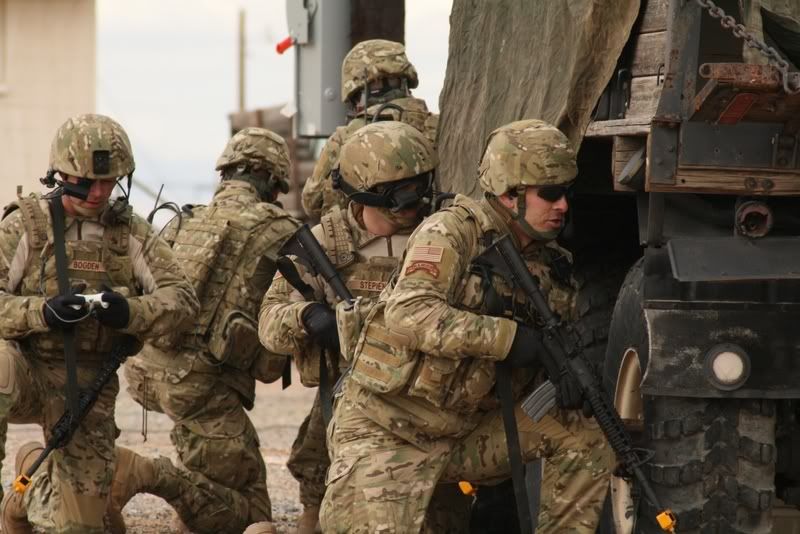
Multicam is also refered to as a Universal Pattern. It's the pattern that is preferred more compared to the ACU by American Personnel. It works in dry vegetation, woodland and it works in a different method compared to the Digi-Cam. Digi-Cam works by tricking the human eye with the squares and blends into the enviroment. The multicam on the other hand tricks they eye by tricking the eye in terms of shape and volume. The eye works in a way where a small portion of the brain receives colour while the rest is filled by the brain in a process called "filling-in". Multicam takes advantage on this concept by blending a few colours to make a "universal pattern". It uses green to blend in the forest and woodland areas, and tan to blend in the desert. This tricks the eye according to lighting, making it suitable for several terrains instead of just one.

As you can see from above, it works well in both vegetation and desert terrain. This makes it much more effective in terms of creating a universal pattern and that is what the American Armed Forces has been trying to look for.
What's the problem with the Multicam?
From the descriptions and photos I've given above, it seems like the Multicam works as an excellent universal pattern. However, lets dissect this debate and see it from different perspective. While the Multicam seems to work better in vegetation and several other terrains, the ACU works better than the Multicam in areas like snow, urban (still debatable) and mountain terrains. The grey colours of the ACU, blend perfectly in the Afghan mountains to an extend that it is better than the Multicam.
Another problem with the multicam is that, it is owned by Crye Precision LLC. A private entity, not government. This gives an image of the American Army being a body that fails to create their own pattern even with the tax payer's money but going on to a pattern that has been in the market for civilians for quite a long time. Not to mention other countries have been using this pattern with alterations to it. (The Polish Army for example, uses a darker version of multicam). Now the government wants to totally replace the ACU with the Multicam. It just gives a negative image from the Pentagon to the global media.
My proposal:
Whilst American Army generals are busy signing documents for supplies of Multicams to be shipped of to Afghanistan and Iraq, they should have looked at how the Marines manage the uniform. Now the Marines uses the MARPAT or Marine's Pattern. However, they have 2 variants. One for desert and one for temperate/woodland. In fact, they are also created one for snow/urban and mountain terrains.
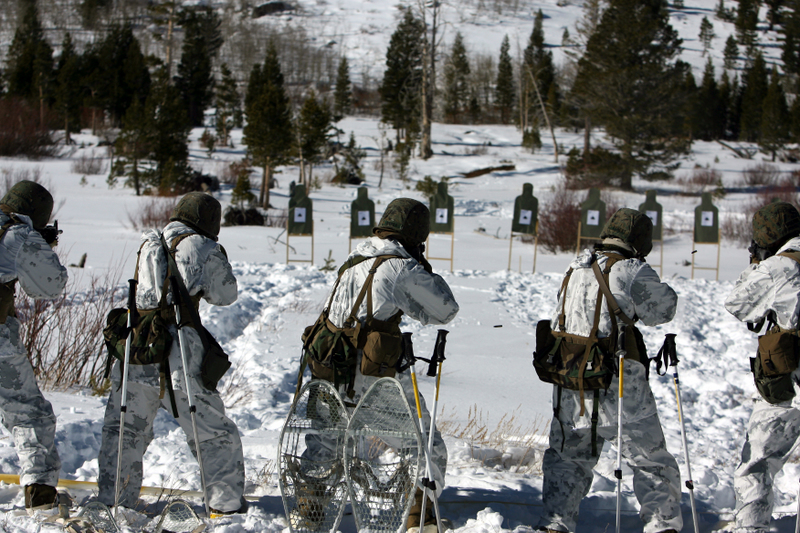
Snow variant of the MARPAT.
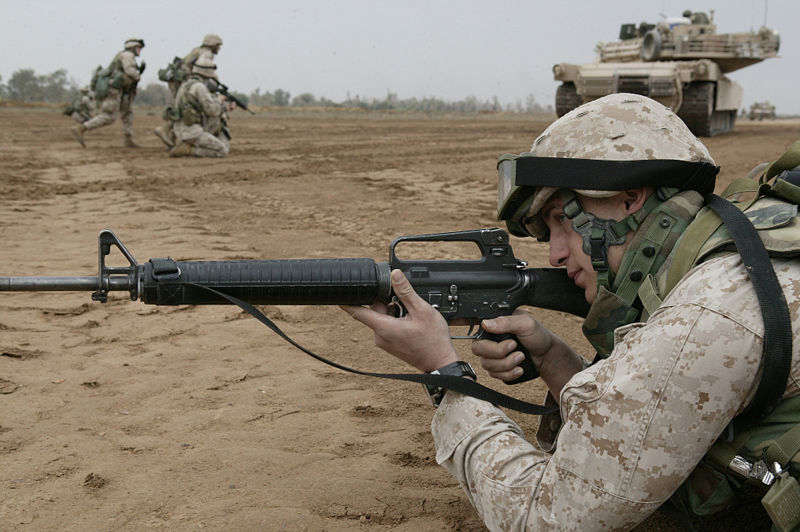
Desert Variant of the MARPAT

Woodland/Temperate version of the MARPAT.
The American Army instead of trying to have universal pattern, they should drop the idea of having one because it's almost impossible to achieve a universal pattern. The best way is to have several variants of uniforms. Below are some suggestions.
Rocky Mountains - ACUs
Temperate - Multicam/BDUs
Green Mountains - Multicam/BDUs
Tan Deserts - Multicam/DCUs
Urban - ACU
Snow - ACU
Woodland - Multicam (Darker Variant)/BDUs/OD Greens (?)/Tiger Stripes(?)
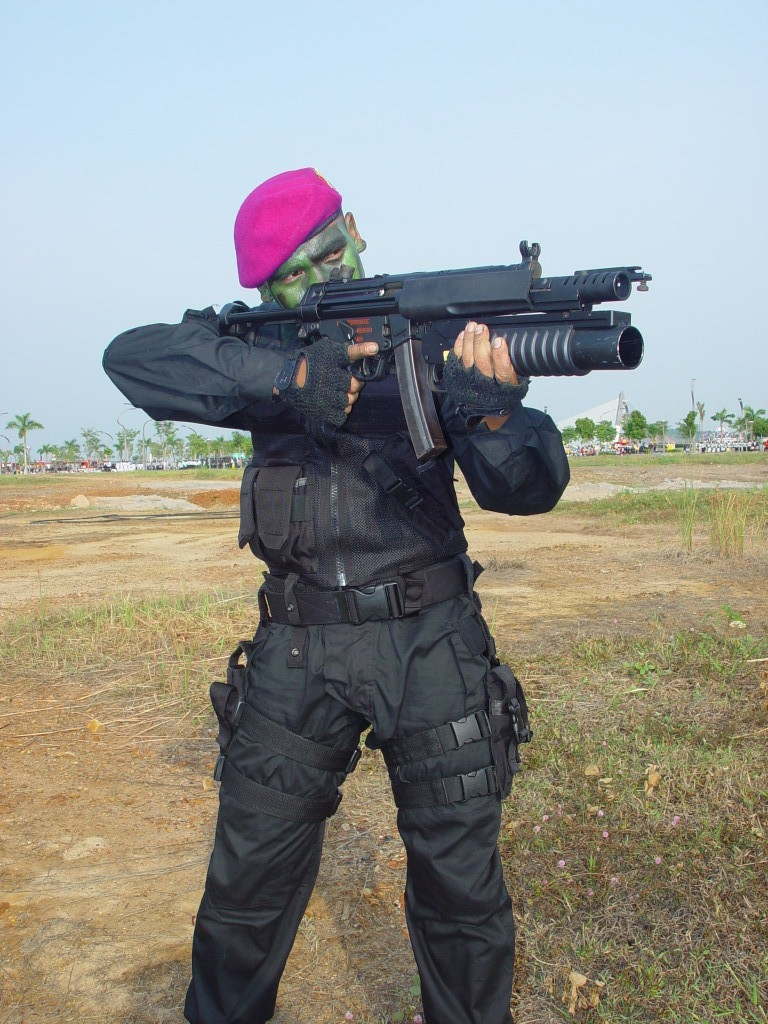
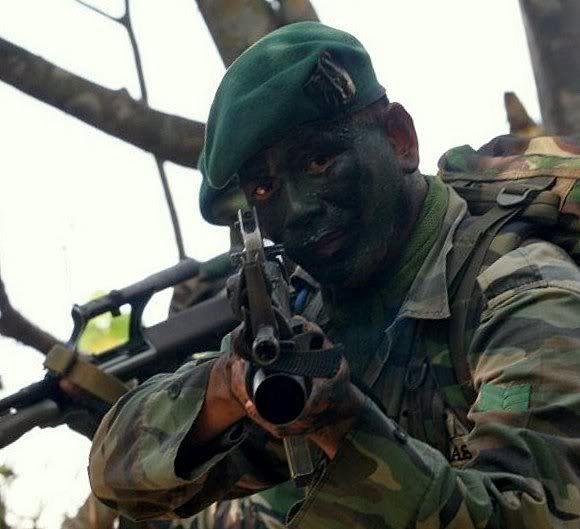
While some may argue this is a logistical nightmare, just look at the Marines. They did it. Look at the Singaporeans, they have 2 variants too or maybe look at the Malaysian Army, they have 2 variants of their uniform, woodland and desert and finally, look at the Malaysian Maritime Enforcement Agency, they have 3 uniforms, zebra woodland, CQB Black and ACUs. Even a better example, the Chinese Army has 7 camouflage. Just use all of them. Simple as that.
Feel free to comment.
Edit: For another effective digicam, check out the Singaporean Digicam here: http://randomworksofterence.blogspot.com/2012/01/singaporean-army.html
Edit (2): US Army's newer selection of uniform, post Multicam: http://randomworksofterence.blogspot.com/2012/01/us-army-changing-uniform-again.html
Rocky Mountains - ACUs
Temperate - Multicam/BDUs
Green Mountains - Multicam/BDUs
Tan Deserts - Multicam/DCUs
Urban - ACU
Snow - ACU
Woodland - Multicam (Darker Variant)/BDUs/OD Greens (?)/Tiger Stripes(?)
While some may argue this is a logistical nightmare, just look at the Marines. They did it. Look at the Singaporeans, they have 2 variants too or maybe look at the Malaysian Army, they have 2 variants of their uniform, woodland and desert and finally, look at the Malaysian Maritime Enforcement Agency, they have 3 uniforms, zebra woodland, CQB Black and ACUs. Even a better example, the Chinese Army has 7 camouflage. Just use all of them. Simple as that.
Feel free to comment.
Edit: For another effective digicam, check out the Singaporean Digicam here: http://randomworksofterence.blogspot.com/2012/01/singaporean-army.html
Edit (2): US Army's newer selection of uniform, post Multicam: http://randomworksofterence.blogspot.com/2012/01/us-army-changing-uniform-again.html