Showing posts with label US Army. Show all posts

Saturday, January 14, 2012

8th Commando Kandak, Afghanistan


Last December, the American military just withdrew their forces from Iraq, leaving the country to be independent. Now plans for pulling out of Afghanistan is rumored to be on the 2014. It's still a long time away but it's good time for the Afghans to get hold of training from the Americans and go through the mess done the Americans themselves. At least get them to train after having "fun" there.

The following are photos of the Afghan Army's 8 Commando Kandak (Kandak means Battalion in Afghan.)


Members of coalition special operations forces conduct a clearance of a compound during an operation in Akhtar village, Arghandab district, Zabul province, Afghanistan, Jan. 11. Coalition SOF partnered with the 8th Commando Kandak to clear the village of insurgent activity and ensure regional security.


Members of coalition special operations forces conduct a security patrol in Akhtar village, Arghandab district, Zabul province, Afghanistan, Jan. 11. Coalition SOF partnered with the 8th Commando Kandak to clear the village of insurgent activity and ensure regional security.


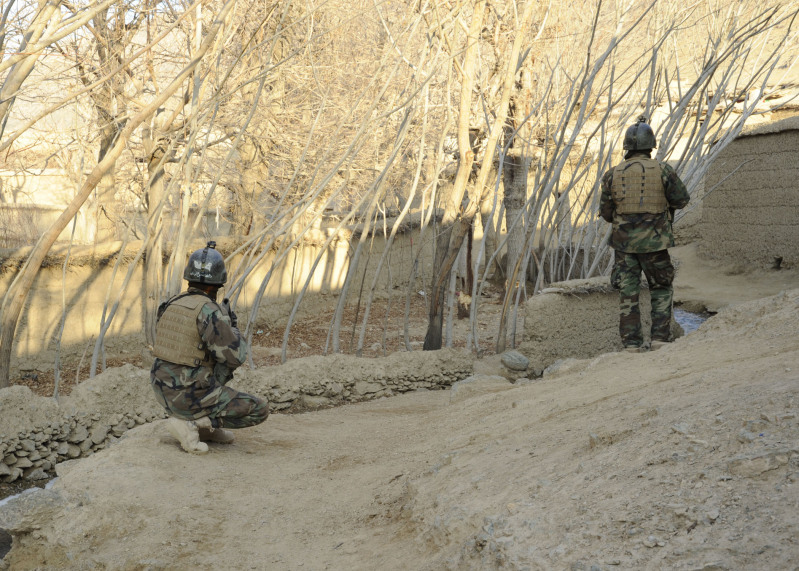
Members of the 8th Commando Kandak patrol in an alleyway during a clearance operation in Akhtar village, Arghandab district, Zabul province, Afghanistan, Jan. 11. The commandos partnered with coalition special operations forces to clear the village of insurgent activity and ensure regional security.


A member of the 8th Commando Kandak rests during a clearance operation in Akhtar Village, Arghandab district, Zabul province, Afghanistan, Jan. 11. The commandos partnered with coalition special operations forces to clear the village of insurgent activity and ensure regional security.


Click the pictures for better resolutions. It looks blurry here for some reason but it's actually pretty hi-res. Again, thanks to V03303 from MP.net for compiling the photos. I wished the Americans actually gave them the old Chocolate Chip uniform they used during the Gulf War rather than BDU. They really like to mess up uniforms don't they?

Thursday, January 12, 2012

US Army Changing their uniform again?

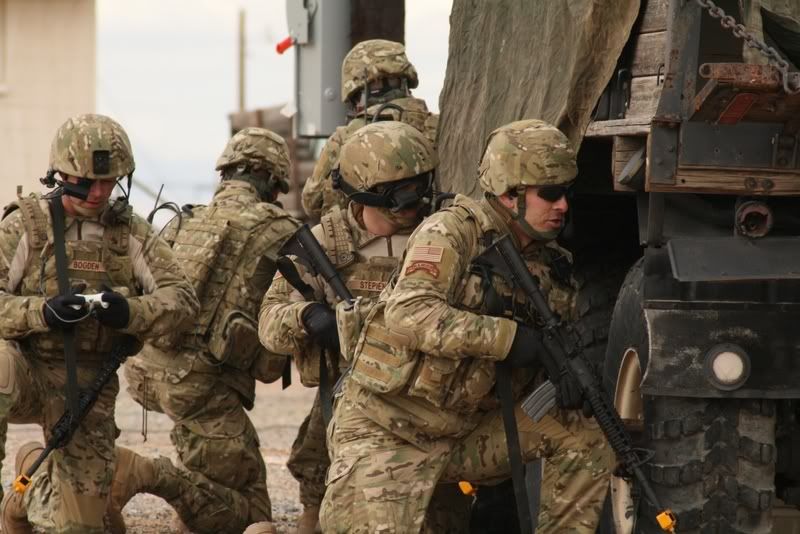
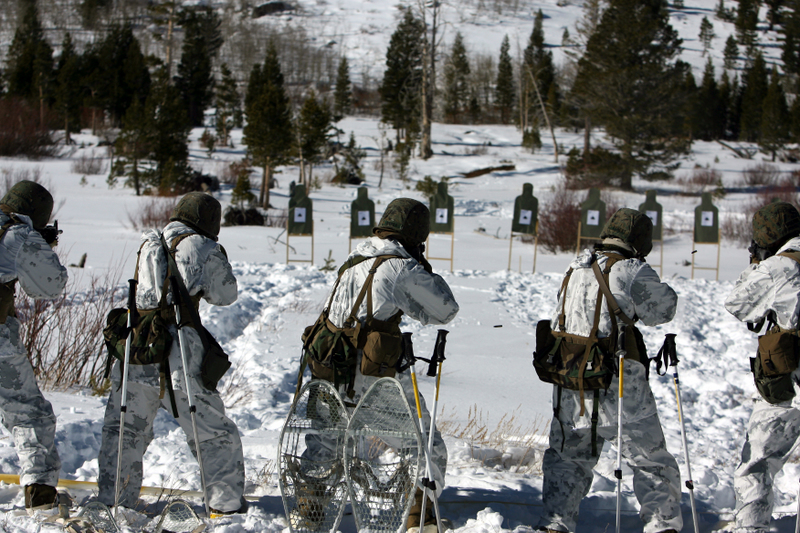
In the past I've posted about the Multicam and how it has worked perfectly. The US Army took the right step forward in choosing the Multicam and made a huge mistake when using the ACU while claiming it was a universal pattern. Let's admit it, it's bad as a universal pattern and only works as a form of camo in urban, mountain range and snowy areas. It only works in rural Afghanistan and fails as a whole in Iraq. When the US Army then decide to go forward with Crye's Multicam, it was an excellent choice. It works from Urban to grassland, the actual Universal pattern that works in all sorts of terrain. Of course it doesn't works so great in snow but it works in much more places compared to the horrible ACU. (For more on the ACU v. Multicam arguments and some of the Marine Corp uniform, click here.) Just take a look at the photos below:


They recently just distributed the uniform to soldiers and now they're developing a new set of uniform. According to MilitaryTimes.com and PEOSoldier.com, the following are the companies researching the new uniform. May as well they just get either Crye or the company that made the Canadian Army CADPAT. They perfected the universal pattern.

1. ADS, Inc. (teamed with Hyperstealth, Inc.) – Virginia Beach, Virginia
2. Brookwood Companies, Inc- New York, NY
3. Crye Precision, LLC – Brooklyn, NY
4. Kryptek, Inc. – Fairbanks, AK
5. Government pattern developed at U.S. Army Natick Soldier Research, Development and Engineering Center (NSRDEC), Natick, MA
Some the readers of this blog probably has heard of Crye in my older posts about the Multicam. Now, from some research over the internet, some of uniforms do look cool but isn't it too early to move away from Multicam? Some of the designs are pretty interesting, moving away from the digicam most countries try to imitate.

Here's the design by ADS Inc (Some sites say that they're teaming up with GuyCramer but some say it's Hyperstealth Inc, I'm not so sure which correct.) Apparently they're calling the pattern Ghostex (and some variants).


There are more variants of Ghostex here.

I couldn't find any patterns from Brookwood and this is the first time I've heard from the company. For Crye, I believe that they're putting out a variant of Multicam in the running because one of the rules is that the uniform created must not be commercially available before the selection. The one that actually caught my eye after researching is the Kryptek uniform. They actually came up with this new styled of camo that drops the DigiCam style. Their so-called 3D uniform is probably the only one that is bringing something new to table. It looks pretty sci-fi and so far it is satisfying the nerd in me. I can't judge for the moment cause I am yet to see it in an actual environment.


For more info on the Kryptek "3D uniform", visit here.

I'm not so sure about the government owned uniform from NSRDEC but some people in forums actually say it's the original ACU/UCP with brown patches like the one below:


Let's admit it. It's just ACU/UCP in dirt. Plus, you guys are no longer in Iraq anyway.

If the US Army is going to change their uniform, just make sure it's better than the current Multicam. My money is on Crye anyway.

Source(s):
(1) http://militarytimes.com/blogs/gearscout
(2) http://www.ghostex.com/
(3) http://soldiersystems.net
(4) http://www.kryptek.com/leaf/
(5) http://www.ar15.com
(6) http://www.multicampattern.com/

*This is just a civilian's POV. I'm in no way affiliated with any military or military-related companies/research and finally, correct me if I'm wrong on any of the info here.

Thursday, June 3, 2010

ACU VS Multicam and my opinion!

It's been a long time since I've blogged. I've been truly busy with my work and debating. Just last-last week I was busy with the Kenyalang Debate Open and Arau Open. After flying back to Kuching from Penang Island, I headed for Saratok to celebrate Gawai. It's a 5-6 hours drive from Kuching. However, today, I'm not blogging about that.

Today, I'm going to blog about the Multicam and the ACU (Army Combat Uniform, the pattern itself is refered as ACUPAT). The rival patterns of the US Army and the degree of ridiculousness surrounding the debate. Now before we get deeper into this matter, let's see what's the issue and let's see what's so special about both camos.


The current issue: Last month, the United States Army has just decided to replace the ACU (pictured above on the right) with the Multicam (pictured above on the left). This has been controversial as the ACU has been used for years and the Multicam has been in the civilian market for quite a long time. Not to mention, the Multicam isn't digital camo, in which the American government has spent a lot of money for research on. Changing the pattern back to non-digital seems to make a statement to the American public that sounds like "Hey, we spent the tax payer's money on digital camo research and we have decided to use a private company's pattern which seems to be better. What a waste of tax payer's money!" That is one statement the Pentagon is making towards the genral public. However, the multicam seems to work better as a "universal pattern" more than the ACU which in the 1st place, is claimed as the "Universal Camouflage Pattern (UCP)".

To better understand the issue even more, let's dissect what's so special and what's wrong with these patterns.

What's so special about the ACU?


The ACU uses a style of camoflage called "Digi-Cam" in which instead of the typical patterns and shape, it utilizes pixels on it's pattern. The 1st country that 1st used the pattern was Canada with their CADPAT. The American government spent a lot of money trying to emulate the CADPAT for their own purposes. Even the Colombian Army had their own digi-cam for woodland theater of operations. CADPAT came in 2 variants, the woodland variant and the temperate variant. The ACU on the other hand, came out in one variant: GREY. According to some smart-ass general, they claimed the ACU is a UCP or Universal Camouflage Pattern. Now judging from the above, the ACU works well in Mountain Terrains. It also seems to work fine in Urban and Snow terrain. So good in Urban terrain that the Polish's Police Special Forces with BOA, adopted it too. (The Malaysian Maritime Enforcement Agency's Commandos aka STAR also adopted it). Due to the fact it is suppose to work well as a universal pattern, it is expected to work well in other terrains too. Then again, it works in Urban, Snow and Mountain terrains.

What's the problem with the ACU?

Now the problem with ACU is that, it does not function it's role as a universal pattern. While it works great in snow, mountains, grey coloured deserts and urban areas it does not blend in other theater of operations (READ: IRAQ AND THE AFGHAN PLAINS). What I mean by this is that Iraq has a tan desert. Using an ACU in such condition would only make you pop up from miles away. This explains why many PMCs prefer the old 90s DCU or it's much more popular name, Chocolate Chip. Not only that, some turn to the British Desert Variant-DPM that has been used by them. On the Afghan plains however, the terrain varies quickly. While one moment a patrol may be working in a snow covered terrain and rocky grounds, another moment, they would end up in poppy fields in which they stand out and become Taliban snacks. This explains why the DEA uses the Multicam in Afghanistan: to hide from the enemy there. It does not fulfill the role of it's so called universal pattern claims. Soldiers then prefer the multicam or 90s BDU/DCU.

Another problem when the ACU was put into service is that BDU and DCUs are not regulated like before. This gives less option for army personnel to choose what uniform to use in the battlefield. In fact, even the National Guard now totally uses the ACU. Most bases dropped the BDUs and DCUs straight away and totally, making it almost impossible to revert back to those uniforms without personnels to purchase it themselves. If they purchase it for themselves, they end up looking different from the crowd.

What's so special about the Multicam?


Multicam is also refered to as a Universal Pattern. It's the pattern that is preferred more compared to the ACU by American Personnel. It works in dry vegetation, woodland and it works in a different method compared to the Digi-Cam. Digi-Cam works by tricking the human eye with the squares and blends into the enviroment. The multicam on the other hand tricks they eye by tricking the eye in terms of shape and volume. The eye works in a way where a small portion of the brain receives colour while the rest is filled by the brain in a process called "filling-in". Multicam takes advantage on this concept by blending a few colours to make a "universal pattern". It uses green to blend in the forest and woodland areas, and tan to blend in the desert. This tricks the eye according to lighting, making it suitable for several terrains instead of just one.


As you can see from above, it works well in both vegetation and desert terrain. This makes it much more effective in terms of creating a universal pattern and that is what the American Armed Forces has been trying to look for.

What's the problem with the Multicam?

From the descriptions and photos I've given above, it seems like the Multicam works as an excellent universal pattern. However, lets dissect this debate and see it from different perspective. While the Multicam seems to work better in vegetation and several other terrains, the ACU works better than the Multicam in areas like snow, urban (still debatable) and mountain terrains. The grey colours of the ACU, blend perfectly in the Afghan mountains to an extend that it is better than the Multicam.

Another problem with the multicam is that, it is owned by Crye Precision LLC. A private entity, not government. This gives an image of the American Army being a body that fails to create their own pattern even with the tax payer's money but going on to a pattern that has been in the market for civilians for quite a long time. Not to mention other countries have been using this pattern with alterations to it. (The Polish Army for example, uses a darker version of multicam). Now the government wants to totally replace the ACU with the Multicam. It just gives a negative image from the Pentagon to the global media.

My proposal:

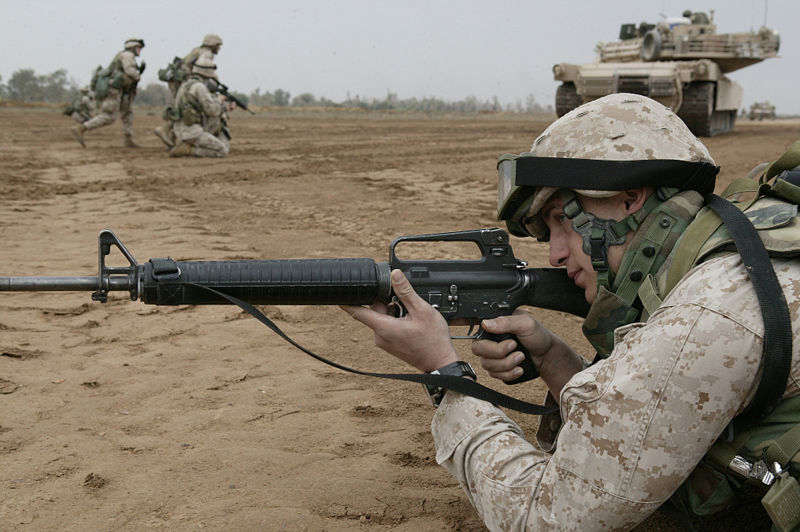
Whilst American Army generals are busy signing documents for supplies of Multicams to be shipped of to Afghanistan and Iraq, they should have looked at how the Marines manage the uniform. Now the Marines uses the MARPAT or Marine's Pattern. However, they have 2 variants. One for desert and one for temperate/woodland. In fact, they are also created one for snow/urban and mountain terrains.


Snow variant of the MARPAT.


Desert Variant of the MARPAT


Woodland/Temperate version of the MARPAT.

The American Army instead of trying to have universal pattern, they should drop the idea of having one because it's almost impossible to achieve a universal pattern. The best way is to have several variants of uniforms. Below are some suggestions.

Rocky Mountains - ACUs
Temperate - Multicam/BDUs
Green Mountains - Multicam/BDUs
Tan Deserts - Multicam/DCUs
Urban - ACU
Snow - ACU
Woodland - Multicam (Darker Variant)/BDUs/OD Greens (?)/Tiger Stripes(?)

While some may argue this is a logistical nightmare, just look at the Marines. They did it. Look at the Singaporeans, they have 2 variants too or maybe look at the Malaysian Army, they have 2 variants of their uniform, woodland and desert and finally, look at the Malaysian Maritime Enforcement Agency, they have 3 uniforms, zebra woodland, CQB Black and ACUs. Even a better example, the Chinese Army has 7 camouflage. Just use all of them. Simple as that.

Feel free to comment.

Edit: For another effective digicam, check out the Singaporean Digicam here: http://randomworksofterence.blogspot.com/2012/01/singaporean-army.html

Edit (2): US Army's newer selection of uniform, post Multicam: http://randomworksofterence.blogspot.com/2012/01/us-army-changing-uniform-again.html


Saturday, January 31, 2009

Today's Pics - Saturday, 31st January 2009 (2)


In this picture released exclusively to Reuters on January 31, 2009, Taliban militants pose with their weapons for pictures in an undisclosed location in Afghanistan January 30, 2009. Picture taken January 30, 2009.


Minister for Defence, the Hon. Joel Fitzgibbon and State Member for Ashgrove, Kate Jones talks to troops from 7 Brigade, Enoggera Army Barracks

The Minister for Defence, the Hon. Joel Fitzgibbon MP talks to troops from 7 Brigade, Enoggera Army Barracks.


Able Seaman (AB) Ashley Semmens wearing the new Disruptive Pattern Navy Uniform (DPNU)


Seaman Alicia Kielty onboard HMAS Pirie wearing the new Disruptive Pattern Navy Uniform during Operation RESOLUTE.


Sailors from Assail 6 onboard HMAS Pirie wearing the new Disruptive Pattern Navy Uniform on board HMAS Pirie during Operation RESOLUTE.


JUNEAU, Alaska -- Coast Guard members listen to Jim Michener, an instructor for the Educational Training Company out of Sitka, Alaska, while he gives information for basic survival techniques. Twenty-four Coast Guard members participated in the five-day training course which gave them perspective on both being rescued and rescuing survivors in Alaska's harsh terrain. (U.S. Coast Guard Photo/PA3 Walter Shinn)


SAN FRANCISCO - An H-60 Pavehawk helicopter from the California Air National Guard 129th Rescue Wing hovers above the survivor of a small plane crash today, Jan. 29, 2009, approximately 10 miles west of Pillar Point. The rescue helicopter hoisted the man and transported him to Coast Guard Air Station San Francisco where he was treated for hypothermia and later transferred to San Francisco General Hosptial by local emergency medical services. (Coast Guard Photo)


SAN PEDRO, Calif. -- Petty Officer 1st Class Rick Leland, assigned to MSST Los Angeles/Long Beach, explains the Coast Guard's K-9 program to Representative Loretta Sanchez (D-CA 47th) Jan. 29 during her visit to Sector LA/LB. Rear Adm. Paul Zukunft, Commander of District 11, and Capt. Paul Wiedenhoeft, Commander of Sector LA/LB look on during the demonstration. (U.S. Coast Guard photo by Petty Officer 3rd Class Cory J. Mendenhall


SAN PEDRO, Calif. -- Representative Loretta Sanchez (D-CA 47th) and Rear Adm. Paul Zukunft, Commander of District 11, are greeted by aircrew members from Air Station Los Angeles Jan. 29 prior to a taking an aerial tour of the Port of Los Angeles during Rep. Sanchez's visit to Sector Los Angeles/Long Beach. (U.S. Coast Guard photo by Petty Officer 3rd Class Cory J. Mendenhall)


MCKINLEYVILE, Calif. (Jan. 29, 2009)- A rescue swimmer from Air Station Humboldt Bay free falls from an HH-65 Dolphin helicopter, while the Coast Guard Cutter Barracuda looks on. Coast Guard air crews conduct regular training with cutters and boats to ensure that all Coast Guard crews are always ready. (Coast Guard photo/Petty Officer 3rd Class Kevin J. Neff)

MCKINLEYVILLE, Calif. (Jan. 29, 2009)- A crew member from Air Station Humboldt Bay is hoisted to the HH-65 Dolphin helicopter as a rescue swimmer hangs on the basket to help stabilize the lift during rescue swimmer training off of the Humboldt County Coast. Air crews frequently conduct training with other Coast Guard units to ensure that all crews are always ready. (Coast Guard photo/Petty Officer 3rd Class Kevin J. Neff)


Around 700 staff walked out of the Grangemouth oil refinery in Scotland and 400 more staged an unofficial strike at a refinery in Teesside(Andrew Yates/AFP/*****)


Bobby Buirds, a regional officer for Unite in Scotland, said that the workers at Grangemouth were striking to protect British jobs, not to confront the foreign workers(Andrew Yates/AFP/*****)


Moroccan soldiers attend a change of command ceremony of the NATO-led peacekeeping Kosovo Force (KFOR), in North Kosovo on January 30, 2009. The French KFOR command was handed over from outgoing General Michel Yakovleff, to new commander, General Philippe Bras. AFP/***** Images


French soldiers attend a change of command ceremony of the NATO-led peacekeeping Kosovo Force (KFOR), in North Kosovo on January 30, 2009. The French KFOR command was handed over from outgoing General Michel Yakovleff, to new commander, General Philippe Bras. AFP/***** Images


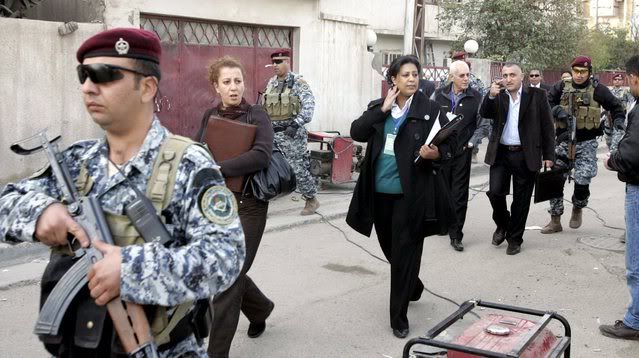
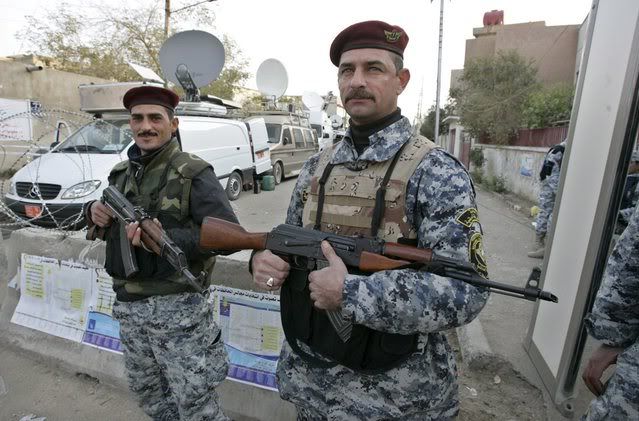
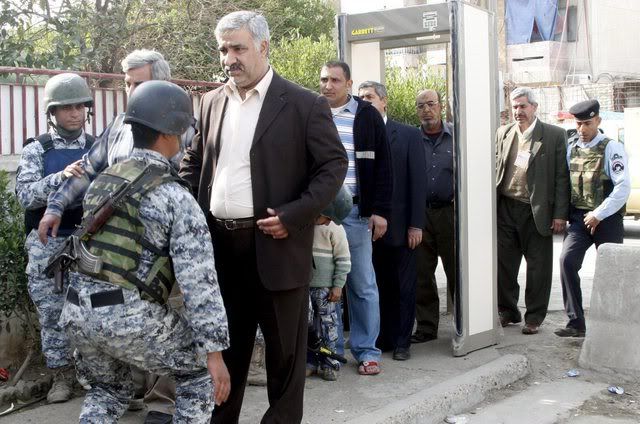
Iraqi army soldiers stand guard outside a polling center in the Azamiyah area of north Baghdad, Iraq, Saturday, Jan. 31, 2009. Iraqis passed through security checkpoints and razor wire cordons to vote Saturday in provincial elections that are considered a crucial test of the nation's stability as U.S. officials consider the pace of troop withdrawals. AP Photo by KHALID MOHAMMED


An Iraqi soldier stands guard as voters stand in line to cast their votes at a polling station during the country's provincial elections in the Shiite enclave of Sadr City in Baghdad, Iraq, Saturday, Jan. 31, 2009. Polls opened Saturday under extremely tight security, which includes driving bans in major cities and searches of all voters. The election is considered an important test of Iraq's stability after nearly six years of conflict. AP Photo by Karim Kadim


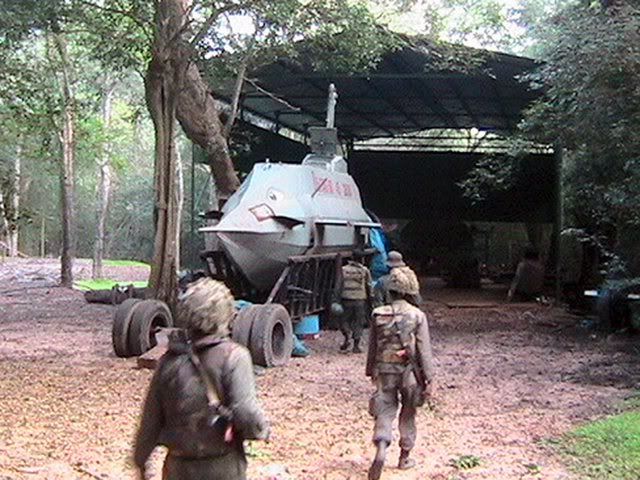
A Sri Lankan military helicopter flies over an armoured personnel carrier in Mullaittivu, January 27, 2009. Sri Lanka's government on Friday again pledged safe passage to thousands of people trapped in fighting between the army and Tamil Tiger rebels, but said there would be no ceasefire with the separatist guerrillas. Picture taken January 27, 2009. Reuters


A Sri Lankan army soldier stands guard as a military helicopter takes off in Mullaittivu, January 27, 2009. Sri Lanka's government on Friday again pledged safe passage to thousands of people trapped in fighting between the army and Tamil Tiger rebels, but said there would be no ceasefire with the separatist guerrillas. Picture taken January 27, 2009. Reuters


Residents walk past a U.S. soldier standing guard near a polling station in Baghdad January 31, 2009. Iraqis voted behind barbed wire and rings of police on Saturday in an election that tested the war-battered country's fragile security gains and which may ease lingering sectarian resentment still fuelling violence. Reuters


An Indonesian navy officer counts the number of Rohingya refugees at a naval base on Sabang island January 31, 2009. The refugees were found floating at sea on a wooden boat on January 7 and taken to the base. Indonesia said on Thursday it was still assessing what to do with a group of 193 Rohingya boat people, as one of the migrants said they would rather die than be sent back to Myanmar where they would face death. Reuters


I don't know who the hell this guy is but he looks like the Sri Lankan version of Chuck Norris!


Soldiers of the Sri Lanka Army patrolling a recently captured section of the road where an earth bund has been put up by the fleeing Tiger cadres at Mullaitivu 384 kms north-east of Colombo 31 January 2009. With almost all its main bastions having fallen into the hands of the government forces, the LTTE is now restricted to a mere 280 sq. km. area of jungle area, Vishvamadu and Puthukudyiruppu being the only prominent townships within. The Tamil Tigers as they are called have been waging an armed struggle for a separate homeland in the north and east since 1976. Cloaked with an image of invincibility, the outfit has spurned peace talks with successive governments. Nearly half the country was under its control by 2006. Since mid 2006, the incumbent government embarked to rid the island of the terrorist menace and presently the Tamil Tigers are losing real estate by the day. While the conflict has claimed the lives of over 75,000 from both sides, a military defeat for the LTTE is looming large and it may be vanquished as a conventional fighting force very soon, according to military sources


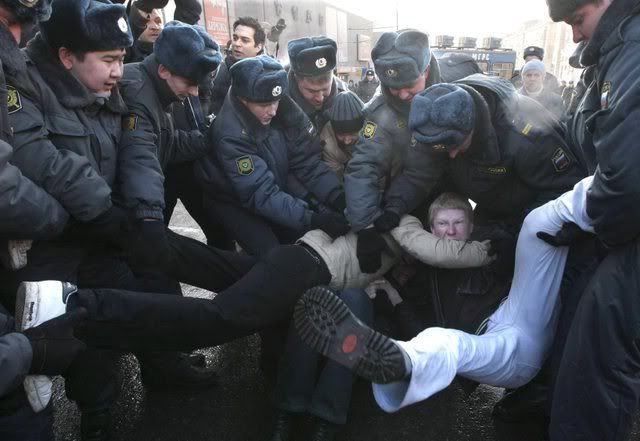
Russian policemen detain a participant of a banned National-Bolshevic ultra-left organisation, shouting 'We hate government!' during a communist protest rally in the centre of Moscow, Russia, 31 January 2009. Some hundred demonstrators demanded support for the working class amidst the national crisis


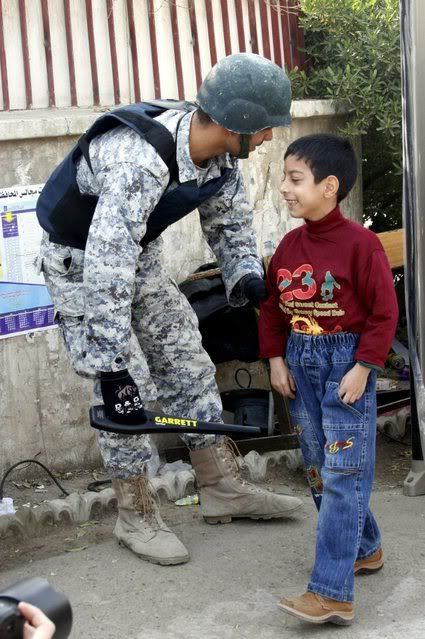
Iraqi policemen searches a child in front a polling station in Baghdad's Karada district, Iraq, 31 January 2009. About 15 million Iraqi voters will participate in the provincial elections under tight security measures imposed by the Iraqi security forces all over Iraq to protect voters and election stations


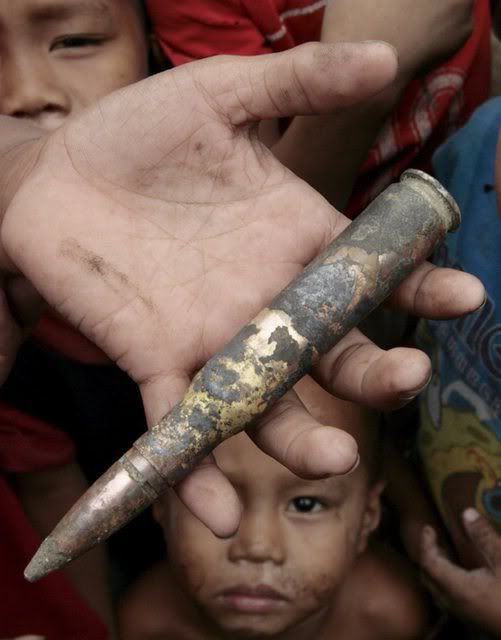
A Filipino boy holds a bullet in Manila, Philippines, 31 January 2009. Brunei on 30 January pledged to dispatch more troops to join an international team monitoring a six-year ceasefire between the Philippine government and Muslim separatist rebels in the strife-torn southern region of Mindanao


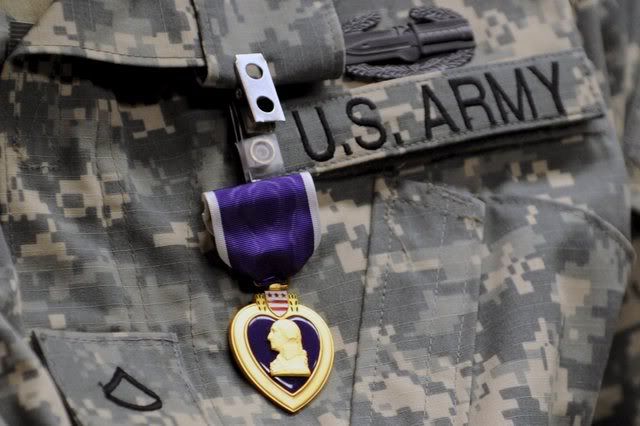
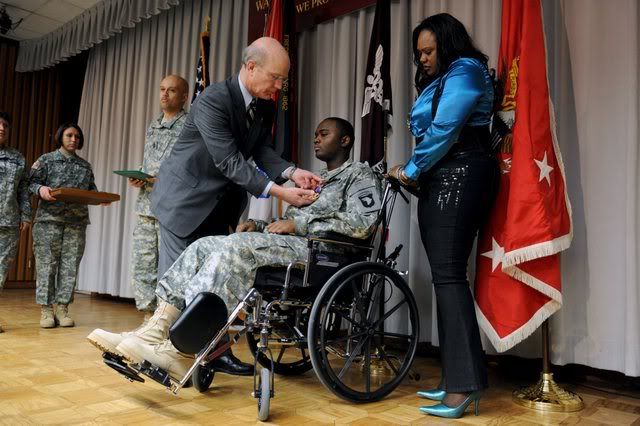
Private First Class Quinterra D. Peake of the U.S. Army wears the Purple Heart medal after receiving it at a ceremony at the Walter Reed Army Medical Center in Washington, DC, USA, on 30 January 2009. The Purple Heart medal is given on the behalf of the President to decorate members of the armed forces injured or killed by instruments of war while serving the U.S. military. PFC Peake was injured when a rocket propelled grenade hit his tower in Camp Herrera, Afghanistan

Pete Geren (L), Secretary of the U.S. Army, places a Purple Heart medal on Private First Class Quinterra D. Peake (C) as his mother Linda (R) stands beside during a ceremony at the Walter Reed Army Medical Center in Washington, DC, USA, on 30 January 2009. The Purple Heart medal is given on the behalf of the President to decorate members of the armed forces injured or killed by instruments of war while serving the U.S. military. PFC Peake was injured when a rocket propelled grenade hit his tower in Camp Herrera, Afghanistan


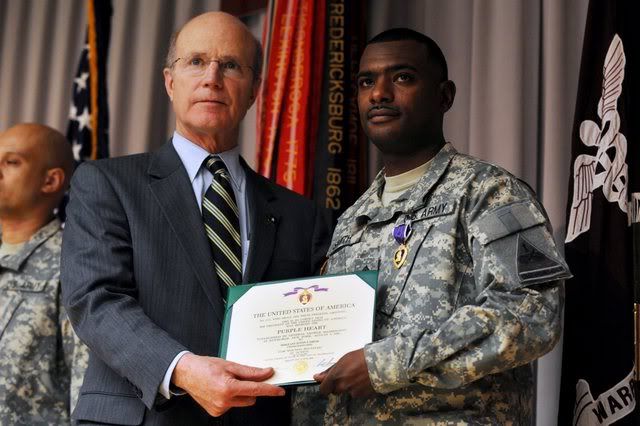
Pete Geren (L), Secretary of the U.S. Army, presents a Purple Heart medal to Sergeant Justin Smith (R) during a ceremony at the Walter Reed Army Medical Center in Washington, DC, USA, on 30 January 2009. The Purple Heart medal is given on the behalf of the President to decorate members of the armed forces injured or killed by instruments of war while serving the U.S. military. Sergeant Smith was injured by an improvised explosive device in Zormat, Afghanistan.