Showing posts with label US Marines. Show all posts

Thursday, June 3, 2010

ACU VS Multicam and my opinion!

It's been a long time since I've blogged. I've been truly busy with my work and debating. Just last-last week I was busy with the Kenyalang Debate Open and Arau Open. After flying back to Kuching from Penang Island, I headed for Saratok to celebrate Gawai. It's a 5-6 hours drive from Kuching. However, today, I'm not blogging about that.

Today, I'm going to blog about the Multicam and the ACU (Army Combat Uniform, the pattern itself is refered as ACUPAT). The rival patterns of the US Army and the degree of ridiculousness surrounding the debate. Now before we get deeper into this matter, let's see what's the issue and let's see what's so special about both camos.


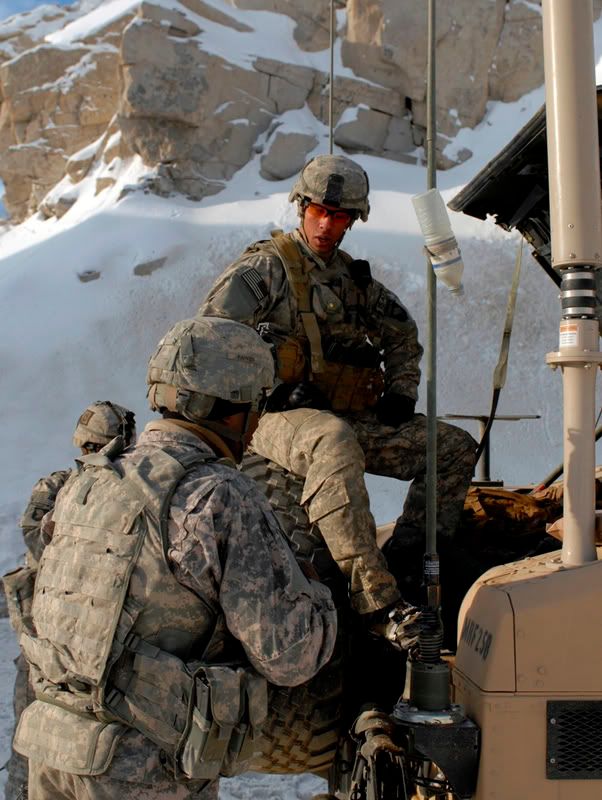
The current issue: Last month, the United States Army has just decided to replace the ACU (pictured above on the right) with the Multicam (pictured above on the left). This has been controversial as the ACU has been used for years and the Multicam has been in the civilian market for quite a long time. Not to mention, the Multicam isn't digital camo, in which the American government has spent a lot of money for research on. Changing the pattern back to non-digital seems to make a statement to the American public that sounds like "Hey, we spent the tax payer's money on digital camo research and we have decided to use a private company's pattern which seems to be better. What a waste of tax payer's money!" That is one statement the Pentagon is making towards the genral public. However, the multicam seems to work better as a "universal pattern" more than the ACU which in the 1st place, is claimed as the "Universal Camouflage Pattern (UCP)".

To better understand the issue even more, let's dissect what's so special and what's wrong with these patterns.

What's so special about the ACU?


The ACU uses a style of camoflage called "Digi-Cam" in which instead of the typical patterns and shape, it utilizes pixels on it's pattern. The 1st country that 1st used the pattern was Canada with their CADPAT. The American government spent a lot of money trying to emulate the CADPAT for their own purposes. Even the Colombian Army had their own digi-cam for woodland theater of operations. CADPAT came in 2 variants, the woodland variant and the temperate variant. The ACU on the other hand, came out in one variant: GREY. According to some smart-ass general, they claimed the ACU is a UCP or Universal Camouflage Pattern. Now judging from the above, the ACU works well in Mountain Terrains. It also seems to work fine in Urban and Snow terrain. So good in Urban terrain that the Polish's Police Special Forces with BOA, adopted it too. (The Malaysian Maritime Enforcement Agency's Commandos aka STAR also adopted it). Due to the fact it is suppose to work well as a universal pattern, it is expected to work well in other terrains too. Then again, it works in Urban, Snow and Mountain terrains.

What's the problem with the ACU?

Now the problem with ACU is that, it does not function it's role as a universal pattern. While it works great in snow, mountains, grey coloured deserts and urban areas it does not blend in other theater of operations (READ: IRAQ AND THE AFGHAN PLAINS). What I mean by this is that Iraq has a tan desert. Using an ACU in such condition would only make you pop up from miles away. This explains why many PMCs prefer the old 90s DCU or it's much more popular name, Chocolate Chip. Not only that, some turn to the British Desert Variant-DPM that has been used by them. On the Afghan plains however, the terrain varies quickly. While one moment a patrol may be working in a snow covered terrain and rocky grounds, another moment, they would end up in poppy fields in which they stand out and become Taliban snacks. This explains why the DEA uses the Multicam in Afghanistan: to hide from the enemy there. It does not fulfill the role of it's so called universal pattern claims. Soldiers then prefer the multicam or 90s BDU/DCU.

Another problem when the ACU was put into service is that BDU and DCUs are not regulated like before. This gives less option for army personnel to choose what uniform to use in the battlefield. In fact, even the National Guard now totally uses the ACU. Most bases dropped the BDUs and DCUs straight away and totally, making it almost impossible to revert back to those uniforms without personnels to purchase it themselves. If they purchase it for themselves, they end up looking different from the crowd.

What's so special about the Multicam?
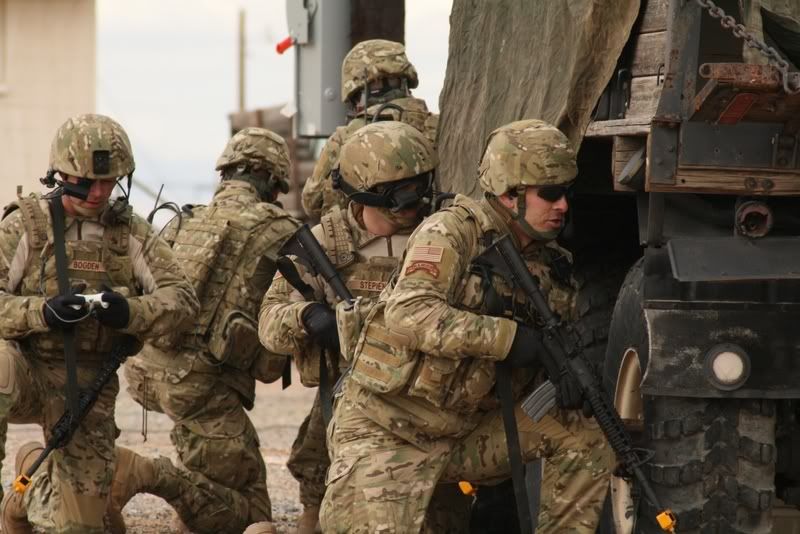

Multicam is also refered to as a Universal Pattern. It's the pattern that is preferred more compared to the ACU by American Personnel. It works in dry vegetation, woodland and it works in a different method compared to the Digi-Cam. Digi-Cam works by tricking the human eye with the squares and blends into the enviroment. The multicam on the other hand tricks they eye by tricking the eye in terms of shape and volume. The eye works in a way where a small portion of the brain receives colour while the rest is filled by the brain in a process called "filling-in". Multicam takes advantage on this concept by blending a few colours to make a "universal pattern". It uses green to blend in the forest and woodland areas, and tan to blend in the desert. This tricks the eye according to lighting, making it suitable for several terrains instead of just one.


As you can see from above, it works well in both vegetation and desert terrain. This makes it much more effective in terms of creating a universal pattern and that is what the American Armed Forces has been trying to look for.

What's the problem with the Multicam?

From the descriptions and photos I've given above, it seems like the Multicam works as an excellent universal pattern. However, lets dissect this debate and see it from different perspective. While the Multicam seems to work better in vegetation and several other terrains, the ACU works better than the Multicam in areas like snow, urban (still debatable) and mountain terrains. The grey colours of the ACU, blend perfectly in the Afghan mountains to an extend that it is better than the Multicam.

Another problem with the multicam is that, it is owned by Crye Precision LLC. A private entity, not government. This gives an image of the American Army being a body that fails to create their own pattern even with the tax payer's money but going on to a pattern that has been in the market for civilians for quite a long time. Not to mention other countries have been using this pattern with alterations to it. (The Polish Army for example, uses a darker version of multicam). Now the government wants to totally replace the ACU with the Multicam. It just gives a negative image from the Pentagon to the global media.

My proposal:

Whilst American Army generals are busy signing documents for supplies of Multicams to be shipped of to Afghanistan and Iraq, they should have looked at how the Marines manage the uniform. Now the Marines uses the MARPAT or Marine's Pattern. However, they have 2 variants. One for desert and one for temperate/woodland. In fact, they are also created one for snow/urban and mountain terrains.
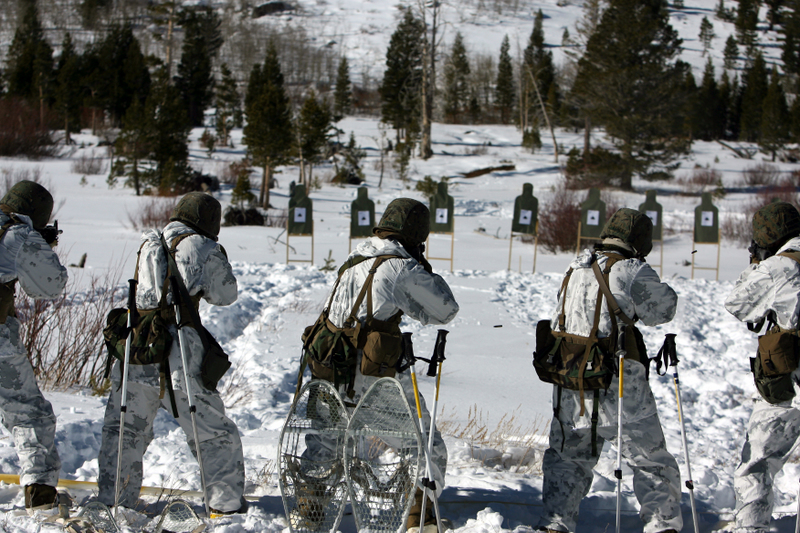

Snow variant of the MARPAT.
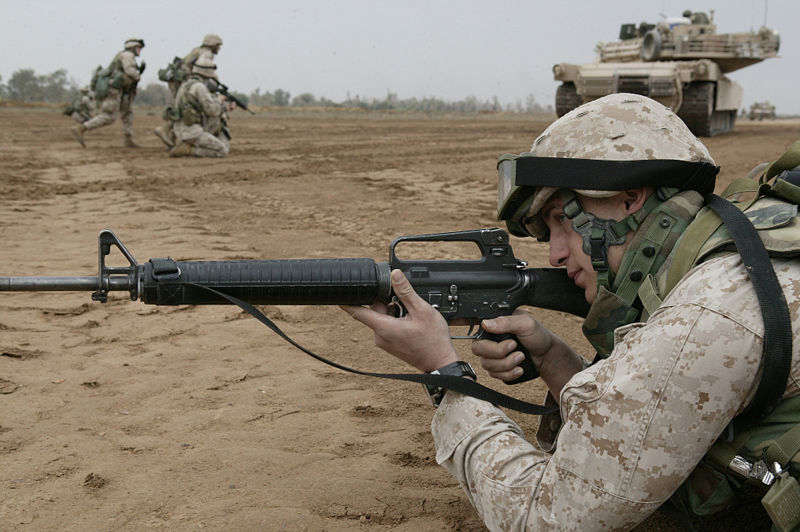


Desert Variant of the MARPAT


Woodland/Temperate version of the MARPAT.

The American Army instead of trying to have universal pattern, they should drop the idea of having one because it's almost impossible to achieve a universal pattern. The best way is to have several variants of uniforms. Below are some suggestions.

Rocky Mountains - ACUs
Temperate - Multicam/BDUs
Green Mountains - Multicam/BDUs
Tan Deserts - Multicam/DCUs
Urban - ACU
Snow - ACU
Woodland - Multicam (Darker Variant)/BDUs/OD Greens (?)/Tiger Stripes(?)

While some may argue this is a logistical nightmare, just look at the Marines. They did it. Look at the Singaporeans, they have 2 variants too or maybe look at the Malaysian Army, they have 2 variants of their uniform, woodland and desert and finally, look at the Malaysian Maritime Enforcement Agency, they have 3 uniforms, zebra woodland, CQB Black and ACUs. Even a better example, the Chinese Army has 7 camouflage. Just use all of them. Simple as that.

Feel free to comment.

Edit: For another effective digicam, check out the Singaporean Digicam here: http://randomworksofterence.blogspot.com/2012/01/singaporean-army.html

Edit (2): US Army's newer selection of uniform, post Multicam: http://randomworksofterence.blogspot.com/2012/01/us-army-changing-uniform-again.html


Friday, January 30, 2009

Today's Pics - Friday, 30th January 2009 (3)

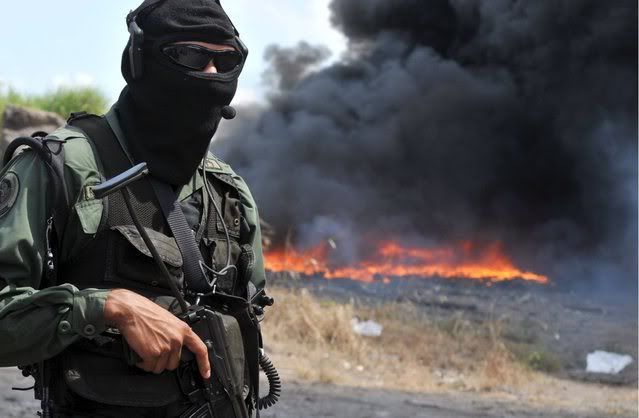
A member of the Panamanian Police covers his face during the drugs burning in Panama City, Panama, 30 January 2009. The drugs were confiscated during different operations in the latest months.


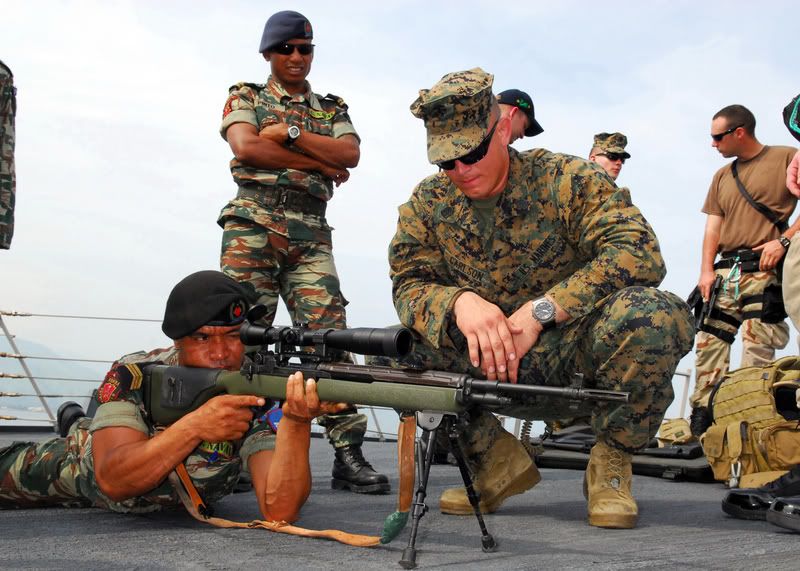
DILI, Timor-Leste (Jan. 28, 2009) Gunnery Sgt. Alex Carlson explains the specifications and uses of the M14 designated marksman rifle to members of the Timor-Leste Defense Force (Navy) aboard the Arleigh Burke-class guided-missile destroyer USS Lassen (DDG 82). Lassen arrived in Dili Jan. 26 on a scheduled port visit. Lassen is assigned to Destroyer Squadron 15 and is forward-deployed to Yokosuka, Japan. (U.S. Navy photo by Mass Communication Specialist 2nd Class Brock A. Taylor/Released)


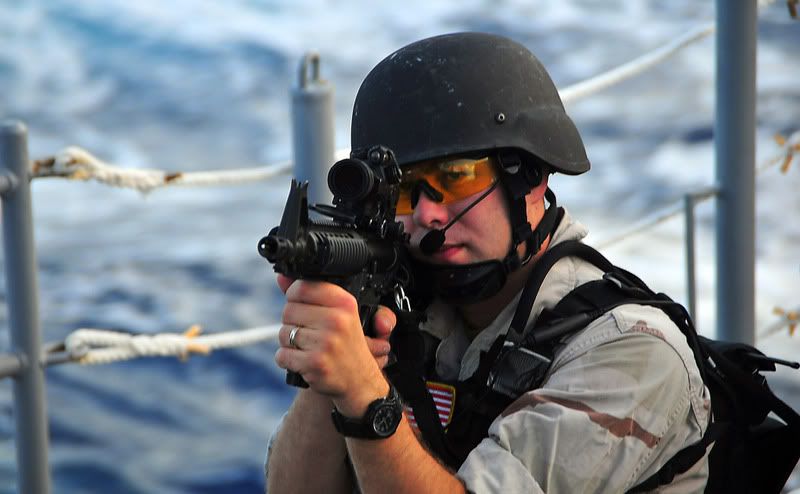
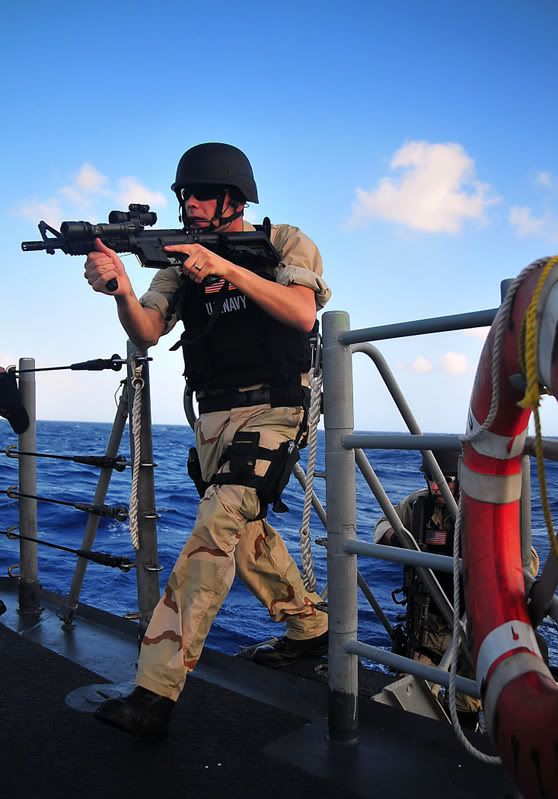
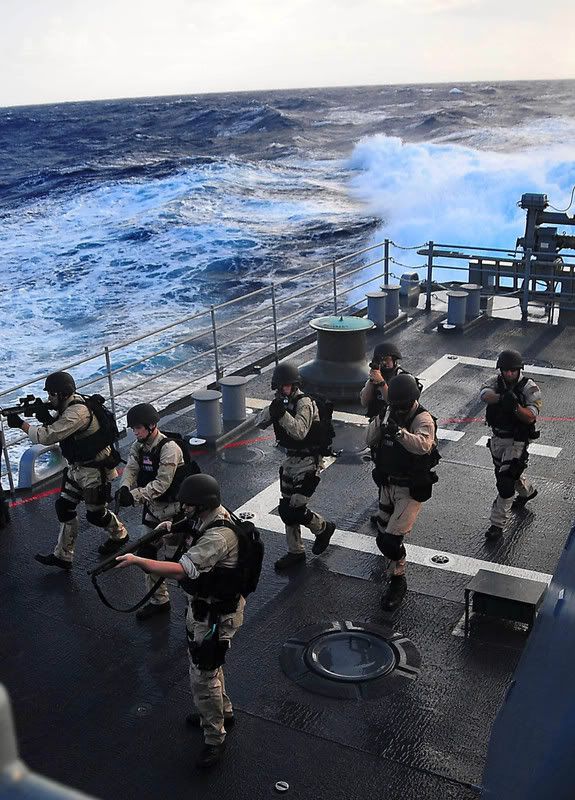
PACIFIC OCEAN (Jan. 27, 2009) Sailors aboard the guided-missile cruiser USS Lake Champlain (CG 57) rehearse procedures during a visit, board, search, and seizure exercise. Lake Champlain is part of the Boxer Expeditionary Strike Group on a scheduled deployment to the western Pacific Ocean supporting maritime security operations. (U.S. Navy photo by Mass Communication Specialist 2nd Class Daniel Barker/Released)


PACIFIC OCEAN (Jan. 27, 2009) Sailors aboard the guided-missile cruiser USS Lake Champlain (CG 57) rehearse procedures during a visit, board, search, and seizure exercise. Lake Champlain is part of the Boxer Expeditionary Strike Group on a scheduled deployment to the western Pacific Ocean supporting maritime security operations. (U.S. Navy photo by Mass Communication Specialist 2nd Class Daniel Barker/Released)


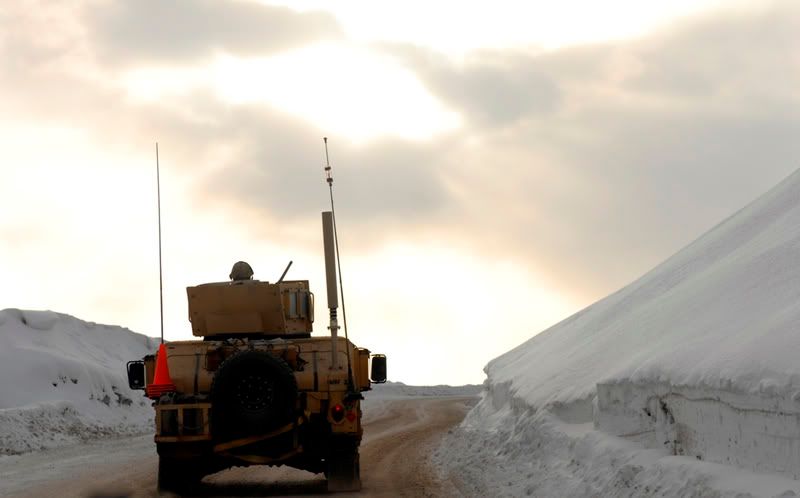
Soldiers with Alpha Company, 101st Division Special Troop Battalion, 101st Airborne Division rest at Afghanistan's Salang tunnel in the Hindu Kush mountain range, Friday. The A Co. "Slayer" Soldiers were checking on the security efforts for the tunnel. Earlier this month, an avalanche outside the south entrance of the tunnel killed at least 10 Afghans and trapping at least another 40.


An Iraqi soldier stands guard outside a polling center in the Shiite enclave of Sadr City in Baghdad, Iraq, Friday, Jan. 30, 2009. Iraq began Friday sealing its borders, halting air traffic and ordering overnight curfews in some of its largest cities on the eve of its nationwide provincial elections


An Iraqi soldier secures a street a day before the provincial council elections in the western city of Ramadi,100 kms from Baghdad on January 30, 2009


A British soldier from a Military Transition Team (MiTT), joins a Iraqi Army patrol close to a polling station which will be used in tomorrow's election on January 30 2009 in Basra, Iraq. While most British soldiers are being confined to their bases and all non-essential movements restricted during the elections, security in Iraq's second city is being increased with a curfew and total vehicle movement ban imposed from this evening in an attempt to ensure the elections run as smoothly as possible. Many areas in Iraq are preparing for provincial elections which are being closely watched as a way of evaluating how peaceful and stable the country now is. British forces are due to withdraw from Iraq later this year and the results will also determine how quickly the number of US troops serving in Iraq can be brought down too.


An Iraqi Army soldier gestures from the top of a Humvee parked outside a polling station which will be used in tomorrow's election on January 30, 2009 in Basra, Iraq. Security in Iraq's second city is being increased with a curfew and total vehicle movement ban imposed from this evening in an attempt to ensure the elections run as smoothly as possible. Many areas in Iraq are preparing for provincial elections which are being closely watched as a way of evaluating how peaceful and stable the country now is. British forces are due to withdraw from Iraq later this year and the results will also determine how quickly the number of US troops serving in Iraq can be reduced.


British soldier from a Military Transition Team (MiTT), watches the street as he joins a Iraqi Army patrol close to a polling station which will be used in tomorrow's election on January 30 2009 in Basra, Iraq.


A soldier in the Iraqi Army watches from the top of a Humvee parked outside a polling station which will be used in tomorrow's election on January 30 2009 in Basra, Iraq

Today's Pics - Friday, 30th January 2009


A memorial to the defenders of Wake Island, including Marine Fighter Squadron 211, stands near the command post of Maj. James Devereux, who lead the defense of the island from Dec. 8-23, 1941. On Jan. 8, 2009, approximately 60 Marines from Marine Attack Squadron 211 returned to Wake Island en route to a deployment to Iwakuni, Japan. The visit marked the first time since 1993 the bulk of the squadron, nicknamed the "Wake Island Avengers" after the original defenders where killed or captured by Japanese forces during the island's siege, has returned to the remote Pacific atoll. VMA-211 is based in Yuma, Ariz.
(Photo by Gunnery Sgt. Bill Lisbon)


Cpl. Josh Nesbit, a powerline mechanic with Marine Attack Squadron 211, looks out at the lagoon in the center of the Wake Island atoll Jan. 8, 2009, during a tour of the island where the where a handful of the unit's Marines helped defend the island from an overwhelming Japanese invasion force from December 8-23 in 1941 before it was captured. The squadron, nicknamed the "Wake Island Avengers," returned to its symbolic birthplace en route to Iwakuni, Japan, where it attached to the 31st Marine Expeditionary Unit for a seven- to nine-month deployment. VMA-211 is based in Yuma, Ariz.
(Photo by Gunnery Sgt. Bill Lisbon)


Soldiers of Troop C, 7th Squadron, 10th Cavalry Regiment, 1st Brigade Combat Team, 4th Infantry Division, Multi-National Division - Baghdad, stand on-line, ready for pre-combat checks and inspections before an early morning patrol brief on Jan. 28 at a patrol base in the Abu T'shir community of the Rashid district in southern Baghdad. The 1st "Raider" Brigade doubled up on its ongoing security operations in preparation for Iraq's upcoming Provincial Elections scheduled for Jan. 31. Searching for any sign of enemy activity or weapons caches, the Soldiers of "Comanche" Troop are assisting Iraqi security forces provide security for Iraq's third democratic election since the beginning of Operation Iraqi Freedom.
(Photo by Staff Sgt. Brent Williams : 1st Brigade Combat Team, 4th Infantry Division Public Affairs)


Sgt. 1st Class Thomas Yaudas, a platoon sergeant from Austin, Texas, assigned to Troop C, 7th Squadron, 10th Cavalry Regiment, 1st Brigade Combat Team, 4th Infantry Division, Multi-National Division - Baghdad, inspects his Soldiers before security operations Jan. 28 in the Abu T'shir community of the Rashid District in southern Baghdad. The Soldiers of "Comanche" Troop continue to search for munitions to deny enemy safe have during the upcoming Iraqi provincial elections scheduled for Jan. 31. Coalition forces are committed to assisting the Iraqi security forces provide security during the milestone event in Iraq's history.
(Photo by Staff Sgt. Brent Williams : 1st Brigade Combat Team, 4th Infantry Division Public Affairs)

An Iraqi citizen tells Capt. Sean Tennimon, commander of Troop C, 7th Squadron, 10th Cavalry Regiment, 1st Brigade Combat Team, 4th Infantry Division, Multi-National Division - Baghdad, about rockets found in his field months prior, Jan. 28, in the Abu T'shir community of the Rashid district in southern Baghdad. Coalition Forces are increasing their efforts to assist Iraqi Security Forces provide security for Iraq's third democratic election. The Soldiers of "Comanche" Troop conducted security operations during the last week of January to deny terrain to potential enemies looking to disrupt the upcoming Iraqi provincial elections scheduled for Jan. 31.
(Photo by Staff Sgt. Brent Williams : 1st Brigade Combat Team, 4th Infantry Division Public Affairs)


Soldiers of Troop C, 7th Squadron, 10th Cavalry Regiment, 1st Brigade Combat Team, 4th Infantry Division, Multi-National Division - Baghdad, search through garbage, digging in rubbish, Jan. 28, while looking for hidden weapons and munitions in the Abu T'shir community of the Rashid District in southern Baghdad. The Soldiers of "Comanche" Troop increased ongoing security operations to assist Iraqi security forces provide security for the upcoming Iraqi provincial elections, scheduled for Jan. 31.
(Photo by Staff Sgt. Brent Williams : 1st Brigade Combat Team, 4th Infantry Division Public Affairs)


Staff Sgt. Arto Brown, a cavalry scout section leader from Tucson, Ariz., assigned to Troop C, 7th Squadron, 10th Cavalry Regiment, 1st Brigade Combat Team, 4th Infantry Division, Multi-National Division - Baghdad, searches a hole for hidden weapons while Capt. Sean Tennimon, Troop C Commander, who hails from Mobile, Ala. provides a little light from his M4 carbine on Jan. 28 in the Abu T'shir community of the Rashid District in southern Baghdad. The Soldiers of the 1st "Raider" Brigade recently increased security operations in preparation for the Iraqi Provincial Elections scheduled for Jan. 31. The elections are Iraq's third democratic elections since the beginning of Operation Iraqi Freedom.
(Photo by Staff Sgt. Brent Williams : 1st Brigade Combat Team, 4th Infantry Division Public Affairs)


Soldiers of 1st Platoon, Troop C, 7th Squadron, 10th Cavalry Regiment, 1st Brigade Combat Team, 4th Infantry Division, Multi-National Division - Baghdad, search for hidden weapons and munitions caches on Jan. 28 in the farmlands on the outskirts of the Abu T'shir community of the Rashid District in southern Baghdad. The 1st "Raider" Brigade increased ongoing security efforts to support Iraqi security forces in providing security and support during Iraq's provincial elections on Jan. 31. The Soldiers of "Comanche" Troop have doubled their security patrols and are working with local ISF to ensure that Iraq's third democratic elections run smoothly.
(Photo by Staff Sgt. Brent Williams : 1st Brigade Combat Team, 4th Infantry Division Public Affairs)


Soldiers of 1st Platoon, Troop C, 7th Squadron, 10th Cavalry Regiment, 1st Brigade Combat Team, 4th Infantry Division, Multi-National Division - Baghdad, spread out across the outskirts of the Abu T'shir community on Jan. 28 during a cache search in southern Baghdad. The Soldiers fill their days with combined security patrols, polling site assessments and security operations to ensure that Iraq's third democratic elections run smoothly. The 1st "Raider" Brigade will continue to support Iraqi security forces in providing security and support during Iraq's provincial elections on Jan. 31.
(Photo by Staff Sgt. Brent Williams : 1st Brigade Combat Team, 4th Infantry Division Public Affairs)

Sgt. Michael Benoit, cavalry scout section leader from Monticello, Minn., assigned to Troop C, 7th Squadron, 10th Cavalry Regiment, 1st Brigade Combat Team, 4th Infantry Division, Multi-National Division - Baghdad, leads Soldiers from the 752nd Explosive Ordnance Company, to members of 1st Platoon, Jan. 28, in a field on the outskirts of the Abu T'shir community in the Rashid District of southern Baghdad. The Soldiers of the "Raider" Brigade increased their ongoing security operations during the last week of January to prepare for the upcoming Iraqi provincial elections, scheduled for Jan. 31. The Soldiers of 1st Platoon, 7th Sqdn., 10th Cav. Regt., called for the EOD unit after finding an unexploded ordnance. The 752nd EOD Co. is stationed out of Fort Hood, Texas, and attached to the 1st Special Troops Battalion, 1st BCT, 4th Inf. Div., MND-B.
(Photo by Staff Sgt. Brent Williams : 1st Brigade Combat Team, 4th Infantry Division Public Affairs)

Staff Sgt. Arto Brown, a cavalry scout section leader, assigned to Troop C, 7th Squadron, 10th Cavalry Regiment, 1st Brigade Combat Team, 4th Infantry Division, Multi-National Division - Baghdad, walks through fields on the outskirts of the Abu T'shir community during security operations in the Rashid District of southern Baghdad. The Soldiers of the 1st "Raider" Brigade increased ongoing security operations to assist Iraqi security forces secure more than 200 polling sites in the Rashid District.
(Photo by Staff Sgt. Brent Williams : 1st Brigade Combat Team, 4th Infantry Division Public Affairs)


Sgt. 1st Class Thomas Yaudas, a platoon sergeant from Austin, Texas, assigned to Troop C, 7th Squadron, 10th Cavalry Regiment, 1st Brigade Combat Team, 4th Infantry Division, Multi-National Division - Baghdad, leads his Soldiers during a cache search on Jan. 28 in the Abu T'shir community of the Rashid District in southern Baghdad. The Soldiers of "Comanche" Troop continue to search for munitions to deny enemy safe havens during the upcoming Iraqi provincial elections, scheduled for Jan. 31. Coalition forces are committed to assisting the Iraqi security forces provide security during the milestone event in Iraq's history.
(Photo by Staff Sgt. Brent Williams : 1st Brigade Combat Team, 4th Infantry Division Public Affairs)

Soldiers of 1st Platoon, Troop C, 7th Squadron, 10th Cavalry Regiment, 1st Brigade Combat Team, 4th Infantry Division, Multi-National Division - Baghdad, search for hidden weapons and munitions caches during pre-election security operations Jan. 28 in the Abu T'shir community of the Rashid District in southern Baghdad. The Soldiers, part of the 1st "Raider" Brigade, have increased security operations to assist Iraqi security forces maintain the Iraqi provincial elections, scheduled for Jan. 31. The Soldiers of "Comanche" Troop have doubled their patrols and continue to conduct weapons searches, and serve warrants for suspected criminals in southern Baghdad.
(Photo by Staff Sgt. Brent Williams : 1st Brigade Combat Team, 4th Infantry Division Public Affairs)

Staff Sgt. David Pena, a cavalry scout squad leader from Grand Junction, Colo., briefs Sgt. 1st Class Thomas Yaudas, platoon sergeant from Austin, Texas, before searching for hidden weapons and munitions along the eastern outskirts of the Abu T'shir community, Jan. 28, in the Rashid District. The Soldiers of Troop C, 7th Squadron, 10th Cavalry Regiment, 1st Brigade Combat Team, 4th Infantry Division, Multi-National Division - Baghdad, increased their security operations to assist Iraqi Security Forces preparing for the upcoming Iraqi provincial elections, scheduled for Jan. 31. Searching for weapons caches and looking to mitigate enemy activity before it begins, the Soldiers of "Comanche" Troop increased their security patrols during the last week of January for Iraq's third democratic elections.
(Photo by Staff Sgt. Brent Williams : 1st Brigade Combat Team, 4th Infantry Division Public Affairs)

Soldiers from Company A, 1st Combined Arms Battalion, 68th Armor Regiment, 3rd Brigade Combat Team, 4th Infantry Division, Multi-National Division-Baghdad came across an interesting find while conducting Operation Trunk Monkey, Jan. 18 in Baghdad's Adhamiyah district - an actual monkey in a trunk. White Platoon, which found the monkey, determined it was vital to the operation to record that there are in fact trunk monkeys within the operational environment. The platoon took a short halt and recorded their find and reported it to higher. Attack Company has encountered a number of different "trunk finds" some of which included a local national, trunk sheep and trunk cauliflower to just name a few.
(Courtesy Photo : 3rd Brigade Combat Team, 4th Infantry Division Public Affairs)

An Iraqi soldier mans a machinegun on an armoured vehicle during a patrol in Mosul, 390 km (240 miles) north of Baghdad January 29, 2009. An election in two days in Iraq's most violent province, where al Qaeda and other insurgents are making a last stand, could bring Sunni Arabs back into power and ease resentment that has fuelled the bloodshed.

A Muslim woman tries a Barrett 12.7mm sniper rifle during the Malaysian Armed Forces career exposition in Kuala Lumpur January 30, 2009. The career exposition, held in conjunction with the Armed Forces 75th anniversary, aims to lure more young Malaysians to opt for careers in the military.
A woman sits in an amphibious armoured personnel carrier and fire-support vehicle during the Malaysian Armed Forces career exposition in Kuala Lumpur January 30, 2009. The career exposition, held in conjunction with the Armed Forces 75th anniversary, aims to lure more young Malaysians to opt for careers in the military.

Ukrainian nationalists carry torches during a rally in downtown Kiev, Ukraine, Thursday, Jan. 29, 2009, to mark the anniversary of a battle near the town of Kruty. Hundreds of cadets were killed defending a newly created Ukrainian state against Bolshevik Red Army forces near the town of Kruty on January 29, 1918.


President of Ukraine Viktor Yushchenko (R) crosses himself during the service ceremony in front of a grave of slain students and schoolboys in Kiev on January 29, 2009, to mark the 91th anniversary of a battle near the small city of Kruty. 300 Ukrainian students, cadets and schoolboys died on January 29, 1918, during the fight against the regular Red Army to protect the new born Ukraine's People Republic against Bolshevik aggression. Dignitaries are unidentified.


A veteran of the Ukrainian Insurgent Army (UPA), which fought both Nazis and Soviet forces in World War Two, listens to the national anthem as he attends a ceremony to honour several hundred students who died during a battle on January 29, 1918 defending the Ukrainian capital from Bolsheviks, in Kiev January 29, 2009. Ukrainians marked the 91th anniversary of the tragedy by laying flowers at a monument.


British soldiers from the 1st Battalion The Princess of Wales' Royal Regiment Sgt Maj Jim Leech (L) and Major 'Grin' Grinonneau, part of a Military Transition Team (MiTT), share a joke as they smoke a pipe on the street as they join a Iraqi Army patrol on the streets on January 29 2009 in Basra, Iraq. Most British forces are being confined to their bases and all movements restricted in anticipitation of a peacefull election. Many areas in Iraq are preparing for provincial elections which are being closely watched as a way of evaluating how peaceful and stable the country now is. British forces are due to withdraw from Iraq's second city Basra later this year and the results will also determine how quickly the number of US troops serving in Iraq can be brought down too.

US soldiers of the Alfa troop 5-1 Cavalry secure the area with Iraqi police (background) at the entrance of a polling station in the town of Mandali in Diyala province on January 29, 2009.


An Iraqi policeman stands guard outside a polling center as election officials carry in voting booths in Mosul, Iraq, Thursday, Jan. 29, 2009.


An Iraqi police officer, left, and an Iraq Kurd peshmerga stand guard at a polling center in Mosul, Iraq, Thursday, Jan. 29, 2009. This weekend's election in Mosul is a showdown for power between Arabs and Kurds, with the outcome likely to influence whether al-Qaida and other Sunni insurgents lose their last major urban foothold in Iraq.
Geneal Bosco Ntaganda, the National Congress for the Defense of the People (CNDP) chief of staff who first challenged Nkunda's leadership in early January, smiles after receiving a Congolese army uniform during an integration ceremony held by the Democratic Republic of Congo at the Rumangabo base, north of the Provincial capital of North Kivu, Democratic Republic of Congo on January 29, 2009


Congolese soldiers embrace fighters of the National Congress for the Defence of the People (CNDP) during a ceremony held by the Congolese army to bring the CNDP fighters into its ranks

Fighters of the National Congress for the Defence of the People (CNDP) soldiers wear Congolese army uniforms and eat ceremonial cookies along with Congolese soldiers


National Congress for the Defence of the People (CNDP) fighters line up during a ceremony held by the Congolese army to bring the into its ranks, held in Rumangabo base, north of the Provincial capital of North Kivu, Democratic Republic of Congo on January 29, 2009. Aid agencies have expressed concern about the humanitarian consequences of further fighting in eastern Congo, where more than one million people have been displaced.